
Rebounder nets: how to practise alone and actually improve

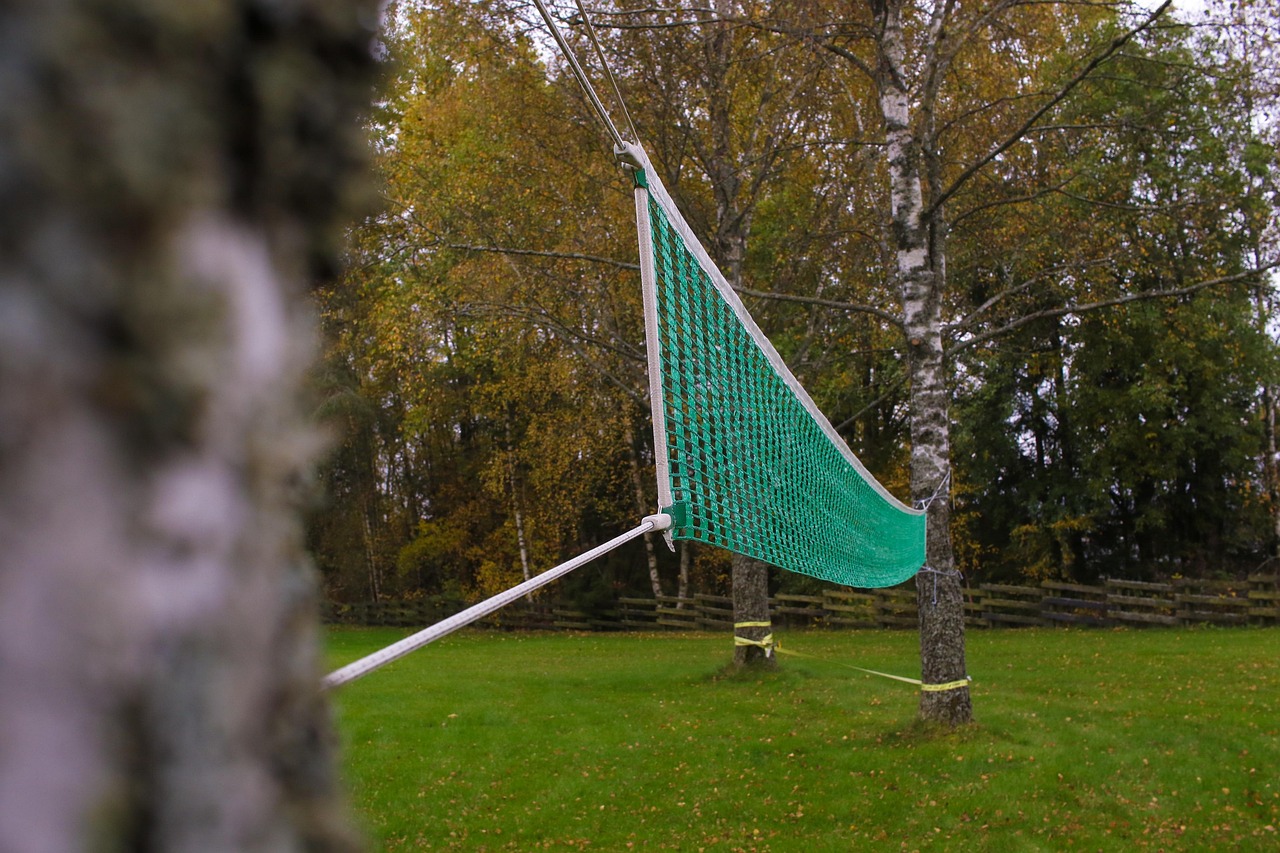
Rebounder nets: how to practise alone and actually improve
The limiting factor in solo practice is not effort, it is repetitions. Without a partner, most of the session is spent fetching the ball. A rebound net changes the ratio: the ball comes back, so you can take a hundred contacts instead of twenty.
What the angle setting does
A net with five adjustable angles is not five degrees of the same drill. Each angle produces a different return and trains a different contact.
- Steepest, leaning back — returns high and short. This is your setting practice: the ball comes down where you can play it overhead repeatedly.
- Mid-angle — returns flat and fast at chest height. Passing and forearm work.
- Flattest, near vertical — returns low and quick. Digging and reaction work; the hardest setting and the one to move to last.
Change the angle deliberately between blocks rather than leaving it where it was last time.
Distance
Distance controls the time you get. Start further back than feels necessary — around twelve feet for a 7×4 ft net — and move in as the contact gets consistent. Moving in halves the reaction time far more quickly than people expect.
If you are missing more than one in five, you are too close or the angle is too flat. Back off; a drill you fail at four times in ten teaches frustration, not technique.
A session that works
- 5 min warm-up. Shoulders, wrists, ankles. Overhead work on cold shoulders is how people end up with rotator cuff problems.
- Block 1 — 50 forearm passes at mid-angle, twelve feet. Target: platform angle, not power.
- Block 2 — 50 overhead sets at the steep angle, eight feet. Target: hands in front of the forehead, ball leaving cleanly with no spin.
- Block 3 — 30 reaction digs at the flat angle, ten feet. Short block. Quality drops fast here.
- Block 4 — 20 combinations. Pass, move, set. Movement between contacts is what makes solo work transfer to a game.
- 5 min cool down.
Checking your own technique without a coach
Film a block on a phone propped on a bag. Watching thirty seconds of yourself teaches more than an hour of feeling like it went well. The three things to look for:
- Are you moving your feet to the ball, or reaching for it?
- On sets, are your hands above your forehead or in front of your chest?
- On passes, are your arms staying still and your legs doing the work?
All three are visible on video and almost invisible from the inside.
Setting the net up so it stays up
Peg every corner, on grass. Rebound nets take a lot of force and an unpegged frame will walk backwards through a session, quietly changing your distance and angle without you noticing.
On a hard surface, weight the base bar. Check the tension of the bungee cords each time — a slack net returns dead balls and you will blame yourself for the bad contacts.
Other sports, same net
The same rebounders work for soccer passing, baseball and softball fielding, and lacrosse. Angle and distance shift, the principle does not. If you have players in more than one sport at home, that makes a rebounder one of the better value items in the yard.
Storage
Take it in over winter. Bungee cords lose elasticity in the cold and the net face goes brittle. A rebounder left out from November to March in Chicago comes back to you slack and returns nothing usefully.
Come and hit one
We keep a rebounder set up in the shop. Take twenty contacts on it and you will know within a minute whether the angle range suits what you want to practise.
Using a rebounder for other sports
The same frame covers more than volleyball. For soccer, set it flat and work on first-touch control at ten feet; for baseball and softball, a steeper angle produces grounders and short hops for fielding practice; for lacrosse, a flat angle at close range gives fast catches.
Each sport wants a different ball weight and speed, so check the net tension rating before firing a baseball at a net designed for a volleyball. A net that is too light will stretch permanently.
Making the sessions count over a season
Solo practice improves technique rather than fitness, and it works best in short, frequent doses. Fifteen minutes four times a week beats an hour on Sunday, because motor learning consolidates between sessions rather than during them.
Keep a note of contact counts. Two hundred quality passes a week is a substantial volume that no team training session would provide, and it is the reason a rebounder changes a player’s touch over a couple of months.
Where to set it up
A rebounder needs a flat surface, room behind you for the balls that get away, and something to stop them rolling into the street. A fence or a wall behind the player is worth as much as the net itself, because chasing balls is exactly what the equipment exists to eliminate.
Set it against a solid backdrop and the session stops being interrupted. That is a small logistical point, and it decides whether the net gets used twice or fifty times.